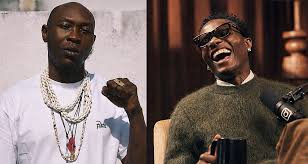
The Nigerian music scene is no stranger to controversy, but the opening weeks of 2026 delivered a clash of a different kind. What began as a debate over legacy between a modern global icon, Wizkid, and Seun Kuti – the youngest son of Afrobeat pioneer Fela Anikulapo Kuti; quickly spiraled into a full-blown war of words that has divided Africa’s largest music industry.
The Spark:
Legacy vs. 10 Billion Streams
The friction did not begin directly with the artists but with their fanbases. For years, Wizkid FC has labeled the singer the “New Fela,” citing his global dominance and historic milestone as the first African artist to surpass 10 billion streams on Spotify.
Seun Kuti, a fierce defender of his father’s revolutionary legacy, reached his breaking point in early January 2026. During a series of Instagram Live sessions, Seun criticized the comparison as “ignorant.”
The Call Out
“Keep Fela’s name out of your mouths. Fela’s legacy was built on political activism and 52 albums of resistance, not music charts and fan rivalries,” Seun stated.
He further emphasized that he still receives six-figure royalties from his father’s work, describing it as proof of a “real legacy” that outlives fame.
The “Big Bird” Dispute
The tension shifted from philosophical to personal on January 14, 2026, when Seun accused Wizkid of stealing his nickname, “Big Bird.” Responding to a fan’s request for him to change the name, Seun fired back:
“Wizkid stole my name. Tell your fave to be original. I have been answering the name long before him.”
The “Nuclear” Response:
Wizkid Breaks His Silence
After nearly a week of daily online jabs from Seun, Wizkid – known for his typically reserved, silent approach, responded on January 20, 2026. In a series of viral posts on X (formerly Twitter) and Instagram, the Grammy-winning artist unleashed a rare and aggressive clapback.
Among the posts were:
The Power Statement:
“I’m Big Wiz everyday, bigger than your papa!! Wetin u wan do, fool?”
The Reality Check:
Wizkid argued that while Fela fought for freedom, Seun was merely “fighting fans” online.
The Viral Jab:
Referring to Seun as a “fool at 40” and a “hungry bastard.”
Many of the posts were deleted shortly after going viral, a move Seun mocked as a lack of confidence, calling it “lack of mind.”
The Aftermath:
A Divided Industry
The Kuti family did not remain silent. Motunrayo Kuti publicly criticized Wizkid for attacking a legacy he seemingly reveres, pointing to the Fela tattoo on the singer’s body. Seun responded with sarcasm, calling Wizkid a “short man” and a “dwarf.”
Industry voices also weighed in. Media personality Daddy Freeze and other commentators offered mixed reactions, with some accusing Seun of intentionally baiting Wizkid, while others condemned Wizkid for what they viewed as disrespect toward a national icon.
Why This Feud Matters
Beyond the insults and online theatrics, the Wizkid – Seun Kuti clash exposes deeper fault lines within African music culture:
Metrics vs. Meaning:
Does commercial success outweigh political impact, activism, and personal sacrifice?
The Power of Stan Culture:
Fanbases like Wizkid FC now influence narratives once controlled by critics and historians.
The New Guard vs. the Old Guard:
How modern stars navigate the towering legacies of cultural pioneers.
Whether you stand with Wizkid or side with the Kuti legacy, one thing is undeniable: the conversation around Afrobeat, influence, and ownership has evolved. In 2026, the crown is heavier; and more contested – than ever.